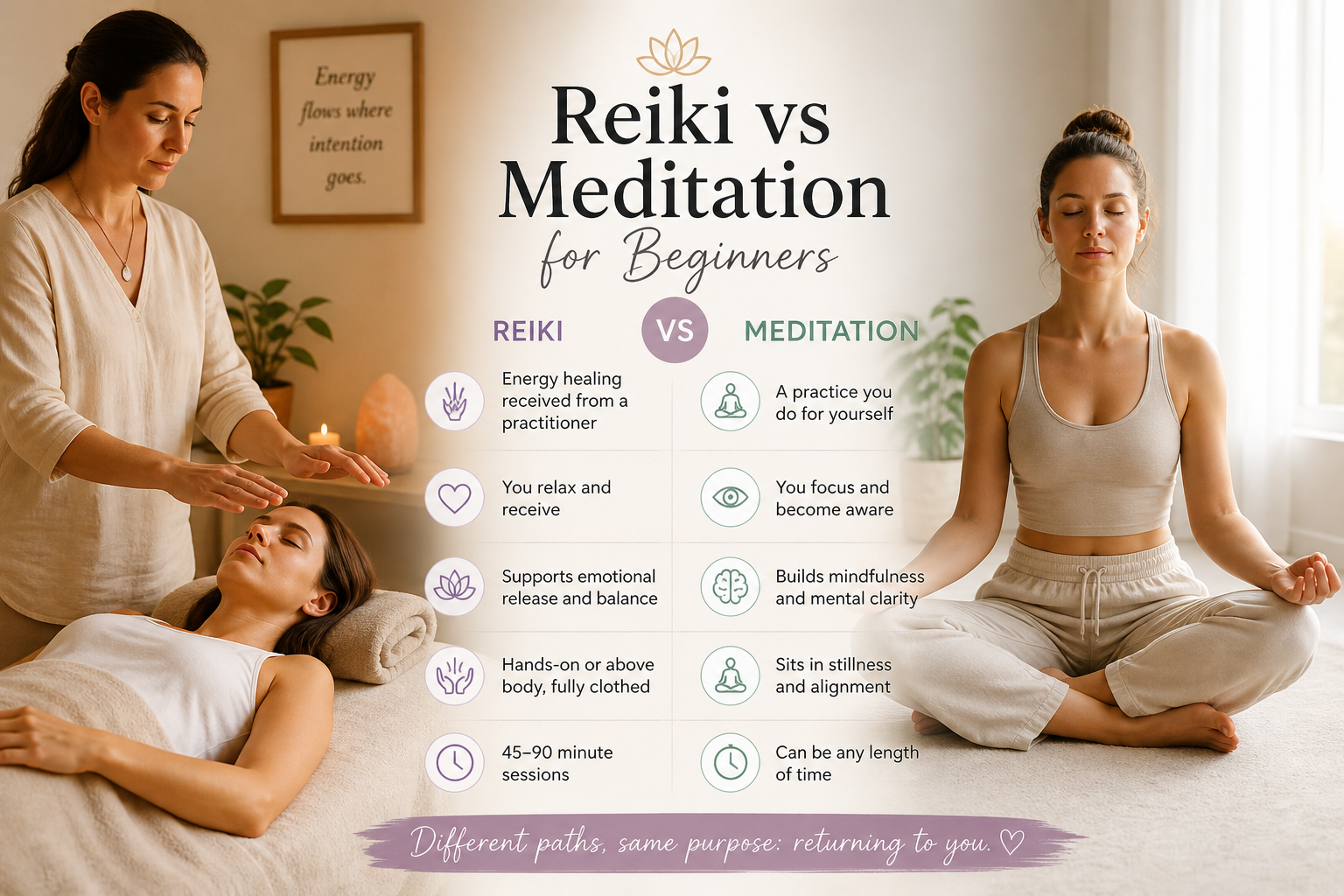

Reiki and meditation both support calm, clarity, and emotional balance, but they work in different ways. This beginner friendly guide explores Reiki vs meditation for beginners and helps you understand which practice may feel most supportive for where you are right now.


Reiki vs Meditation for Beginners, A Gentle Guide to Understanding the Difference
If you are new to healing, mindfulness, or spiritual wellness, you may be wondering about Reiki vs meditation, and which practice is right for you. Both Reiki and meditation can support calm, clarity, emotional balance, and a deeper connection to yourself, but they are not the same thing.
Meditation is usually something you practice from within. Reiki is an energy healing experience that is often received from a practitioner. Both can be gentle, restorative, and deeply supportive, especially if you are feeling overwhelmed, disconnected, emotionally heavy, or unsure where to begin.
For many beginners, the best place to start is not with pressure or perfection. It is with curiosity.
What the Research Shows
of Reiki Sessions That Reported a Reduction in Anxiety
0
%
of US Adults Who Practice Meditation
1
%
Improvement in Anxiety and Pain After Reiki
0
x
What the Research Shows About Reiki vs Meditation for Beginners
Which Practice Is Easier for Beginners?
Meditation and Reiki both support calm, but they meet beginners in different ways. Meditation is widely used as a self guided wellness practice, with NIH data showing that 17.3% of U.S. adults used meditation in 2022. Reiki is often chosen when someone wants to receive support in a peaceful, practitioner led setting, and research has explored its use for anxiety, pain, relaxation, and emotional wellbeing. For beginners, the difference is simple. Meditation helps you practice awareness. Reiki helps you receive support. Both can be beautiful pathways back to balance.
This depends on your personality, nervous system, and current emotional state.
Meditation can feel empowering because you can do it anytime, anywhere. You only need a few quiet minutes and willingness. But for some beginners, meditation can also feel frustrating. Sitting still with racing thoughts, anxiety, grief, or emotional heaviness may feel difficult at first.
Reiki can feel more accessible for people who are tired, overwhelmed, or unsure how to begin. Because you are being guided and supported by a practitioner, you do not have to figure it all out on your own. You can simply receive.
If your mind is very busy, Reiki may be a softer entry point. If you enjoy quiet reflection and personal practice, meditation may feel natural.
Neither is better. They simply offer different doors into healing.
How Reiki Supports the Nervous System
Many people seek Reiki because they feel emotionally overloaded or energetically drained. Stress can leave the body feeling tense, guarded, or disconnected. Reiki creates a calm space where the body can begin to soften.
For beginners, Reiki may help support:
- Emotional grounding
- Deep relaxation
- A sense of inner stillness
- Release of heaviness or tension
- Connection to intuition
- Greater clarity after feeling stuck
Reiki is especially supportive for women moving through transition, burnout, grief, uncertainty, or identity shifts. When life feels unclear, Reiki can help create enough inner quiet to hear what your body and heart may already know.
Meditation helps you build a relationship with your thoughts instead of being controlled by them. With practice, you may begin to notice patterns such as overthinking, self judgment, fear, or emotional reactivity.
Can Reiki and Meditation Work Together?
Yes. Reiki and meditation can beautifully support each other.
Meditation can help you become more aware of what is happening inside. Reiki can help clear and soften the energetic weight connected to those feelings.
You might meditate before a Reiki session to settle your mind. You might meditate after Reiki to reflect on what came up. You might also use Reiki as a way to deepen your meditation practice because your body may feel more relaxed and receptive afterward.
Together, they can support a fuller healing experience. Meditation helps you listen. Reiki helps you receive.
A Beginner Friendly Way to Start
You do not need to commit to a huge routine. Start gently.
Try sitting quietly for three minutes and simply notice your breath. You do not need to do anything special. Just breathe and observe.
Then, consider receiving a Reiki session if you feel called to be supported in a deeper way. Notice how your body feels before and after. Notice what emotions soften. Notice whether clarity begins to return.
Healing does not have to be complicated. It can begin with one quiet moment, one supportive session, one honest breath.
Final Thoughts
When exploring Reiki vs meditation for beginners, remember that both practices are invitations back to yourself. Meditation helps you cultivate awareness from within. Reiki helps you receive energetic support, release tension, and reconnect with your natural sense of balance.
You do not have to choose one forever. You can begin with the one that feels most accessible today.

Curious About Reiki?
Exploring Reiki vs meditation for beginners can help you understand what kind of support feels right for you. At Dono Bella, Reiki sessions and women’s holistic coaching in New Jersey offer a gentle space to feel grounded, emotionally clear, and more connected to yourself. Serving Howell, and the the Monmouth County area, Dono Bella provides energy healing, monthly Energy Circles, and compassionate guidance to help you ease stress, restore balance, and move forward with calm and confidence.
References
- Effects of Reiki on Pain and Anxiety in Women Hospitalized for Obstetrical and Gynecological-Related Conditions: Sage Journals
- NIH analysis reveals a significant rise in use of complementary health approaches, especially for pain management: National Institute of Health
- Meditation: A simple, fast way to reduce stress: Mayo Clinic
Need a Little Clarity?
Feel free to reach out below and ask whatever is on your mind.